
Which saxophone suits me?
Buying the right saxophone starts with two questions: which type suits you, and what level of instrument do you need? Adams helps you make that choice, with personal advice, an extensive stock, and a repair department that technically checks every instrument before it leaves the store.
Are you unsure whether it is better to buy a new or second-hand instrument? Then also read our page about buying a second-hand saxophone.

Alto or tenor. Which should I choose as a beginner?
This is the question that occupies most beginners, and the answer is the same for most people: start on the alto saxophone.
The alto saxophone is smaller, lighter, and requires less finger stretching than the tenor. As a result, it is easier to hold and play, especially in the beginning. Moreover, a beginner alto saxophone is generally cheaper to purchase than a comparable tenor.
The tenor saxophone is larger and has a lower pitch. It is not necessarily harder to play than the alto, but it requires more lung capacity and a different embouchure. For children under twelve, the alto is almost always the better choice due to its more compact size.
Have you been playing for a while and do you specifically want to learn the tenor? Then it is certainly possible to start directly on the tenor. But if you are still unsure, choose the alto.
Read more about all saxophone types on our saxophone types page.
Which saxophone should I choose?
The choice of a saxophone depends on your level, musical style, and personal preference. The overview below will help you choose the right type of saxophone.
| Type of saxophone | Who is it suitable for? | Sound & character | Music styles | Advantages |
|---|---|---|---|---|
| Alto saxophone | Beginners Advanced players All-round players |
Warm and versatile | Pop, jazz, classical, concert band / fanfare | - Most chosen model - Relatively light and comfortable - Plenty of learning material available - Good balance between price and quality |
| Tenor saxophone | Advanced players Adult beginners Jazz enthusiasts |
Deep, full and warm | Jazz, pop, rock, blues | - Characteristic jazz sound - Powerful projection - Very popular in bands |
| Soprano saxophone | Advanced players | Direct and expressive | Jazz, classical, solo performance | - Unique, recognizable sound - Compact size - Ideal for solos |
| Baritone saxophone | Advanced players Ensemble players |
Very deep, powerful and round | Jazz, big band, orchestra, funk | - Foundation of the ensemble - Impressive sound - High demand in orchestras and bands |
Tip: Still unsure? Visit us and try different saxophones in our testing rooms. This way, you can immediately experience which instrument best suits your playing style.
Discover our range of saxophones
The saxophone is a versatile wind instrument with a powerful, expressive sound and is used in various genres such as jazz, pop, classical and wind orchestra. Within the assortment you will find different types, such as the alto saxophone (ideal for beginners), the tenor saxophone with its warm, full sound and the soprano saxophone with a bright, direct tone. When choosing the right saxophone, factors such as intonation, ergonomics, response and finish play an important role.
New or second-hand?
A new saxophone offers certainty. The pads are new, the lacquer or silver plating is perfect, and the pads are new. You know that it features the latest mechanism and that modern production techniques have been used. The instrument also comes with a warranty from both the factory and the store. For beginning players, this also has a psychological advantage: you start with an instrument without a history.
The downside of a new saxophone is the price. New instruments sometimes cost many times more than a comparable second-hand model. Furthermore, mass production often results in the loss of the artisanal nature of producing a musical instrument. At Adams, we inspect every instrument before sale and resolve any issues, often free of charge.
A second-hand saxophone often offers more instrument for the same money. Moreover, vintage saxophones sometimes have a richer sound due to the older brass. At Adams, second-hand instruments are always inspected and, if necessary, refurbished. You are therefore buying a technically reliable instrument.
What is your playing level?
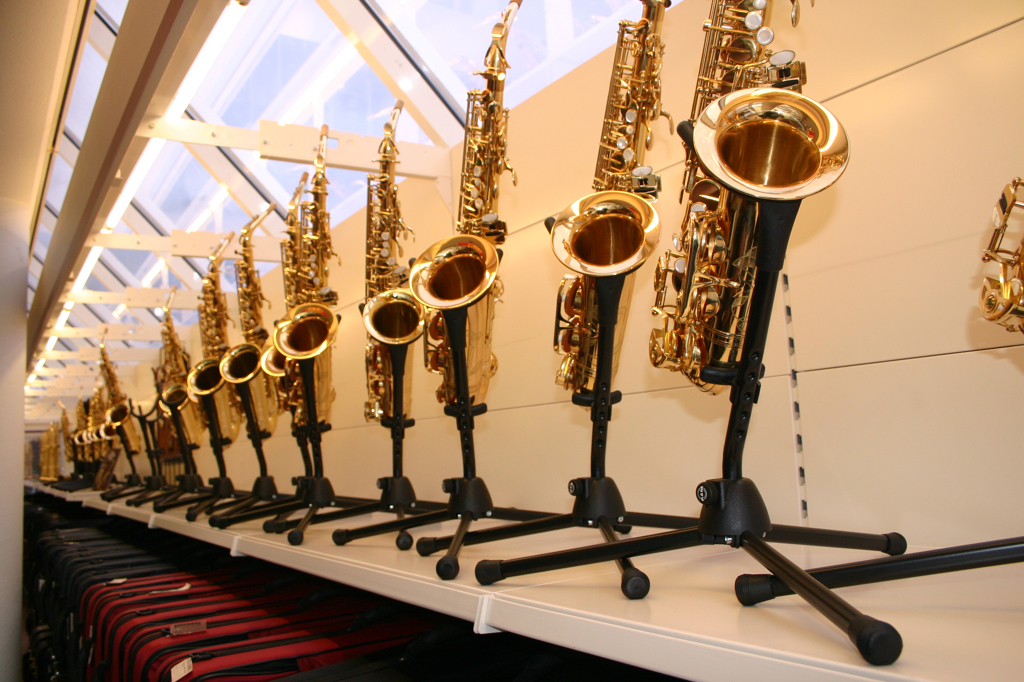
Whether you are a beginner or a professional, at Adams we have a wide range of different brands and types of saxophones for every target group.
Children's saxophones
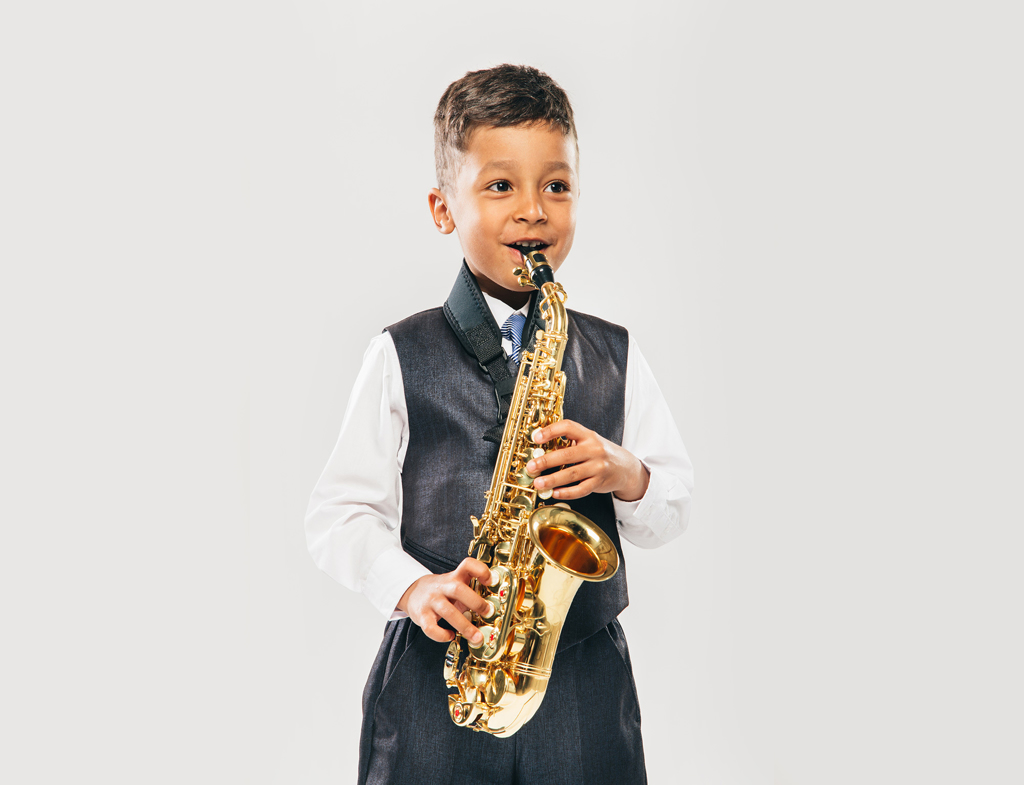
Children aged nine or younger have smaller fingers and are still growing. A standard alto saxophone can be difficult to hold at that age. Fortunately, there are special plastic saxophones that are suitable for small hands, require little maintenance, and can withstand a bump or two. This is also handy if your child is not yet sure if they want to continue playing the saxophone.
Saxophones for Beginners
Are you about to embark on a new challenge and looking for a saxophone that fits? Then you are looking for an instrument that will give you a good start. And if your new hobby ultimately doesn't fit, it shouldn't have cost too much money either. We therefore recommend alto and tenor saxophones. These are versatile instruments with a good beginner segment. The saxophones in this category are also suitable for taking along to a street band or "joekskapel." Be sure to also check out our second-hand offerings. Furthermore, the maintenance costs for every saxophone are about the same, whether it's a professional or a beginner model.
- Made of brass / a combination with gold brass
- Built in China, Indonesia, or Taiwan
Saxophones for advanced players
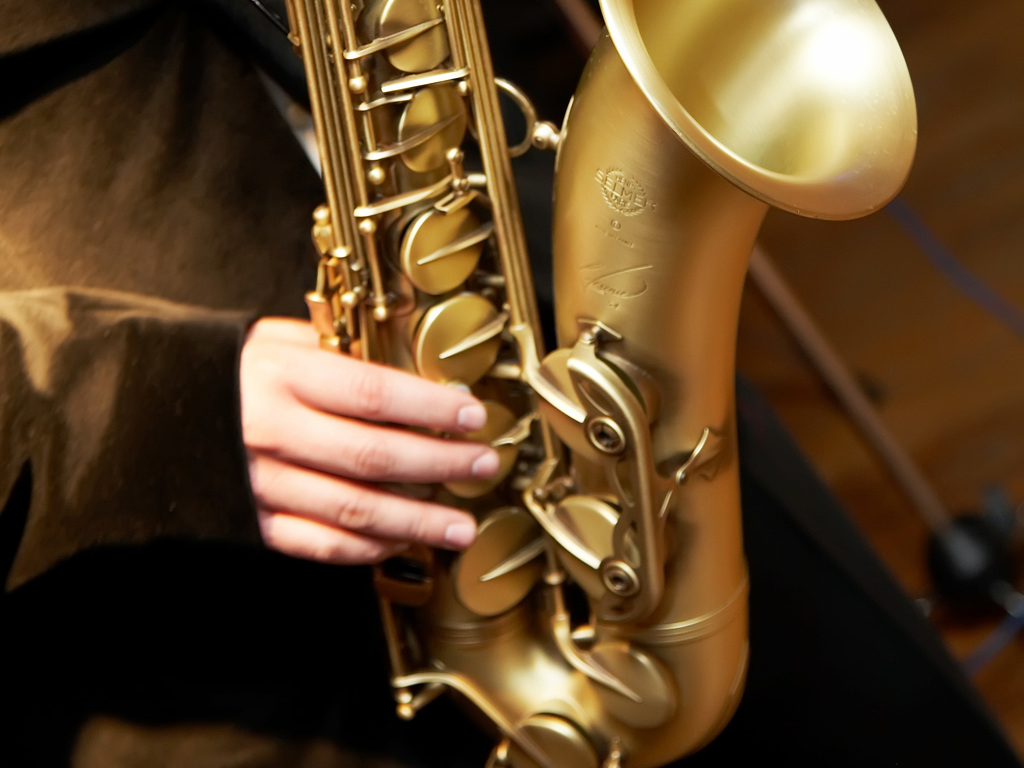
You have been playing for a number of years and may have obtained your A or B diploma. Then it is probably time to trade in your beginner instrument for a better one, or to replace the association's instrument with your own saxophone. In addition to their professional flagship, most major brands have an advanced model that is perfectly suited for this step. We also recommend looking at professional second-hand models. Advanced instruments are typically built in Europe, the US, or Japan and are made of brass or goldbrass.
Saxophones for professionals
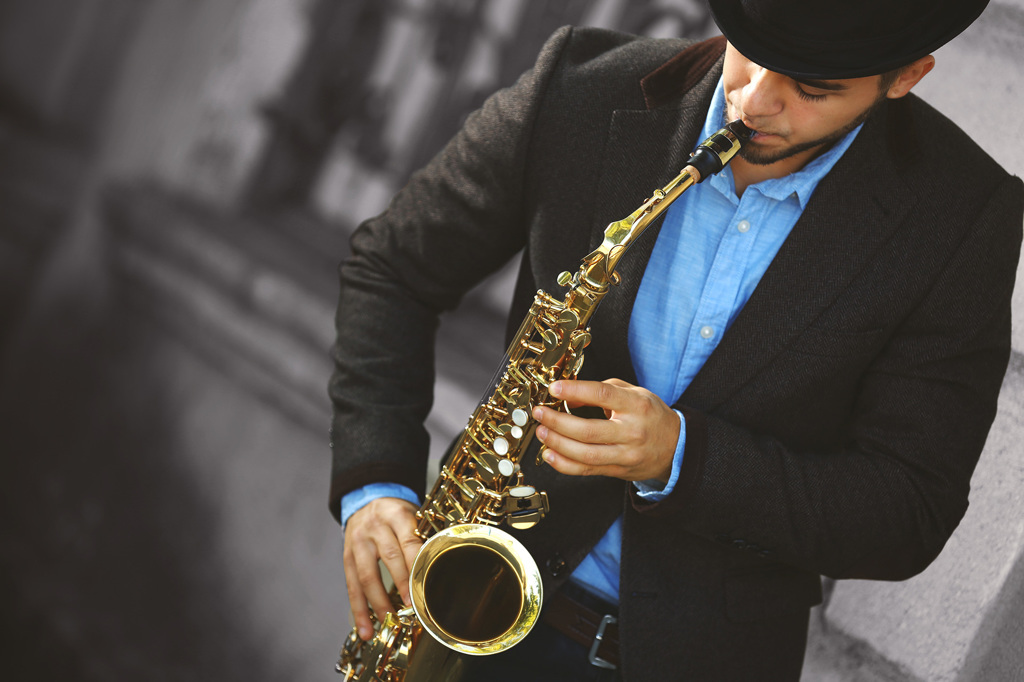
As a professional saxophonist, you probably already know which direction you want to take. Nevertheless, we recommend talking to our specialists before making a choice. Discuss maintenance costs, the genre the instrument is suitable for, and ask about alternatives to the model you have in mind.
How to test a saxophone?
Saxophones are not all the same; each type, brand, and even individual saxophones often have a unique intonation and timbre. The best way to purchase a saxophone is to bring someone who knows how to play the instrument and let them try it out. If you are a saxophonist yourself, it is easy to get lost in the moment and not be critical enough.
For musicians, when you are going to try a saxophone, always pack the following essential items:
- Your own mouthpiece, or the mouthpiece of the person who is going to test the instrument.
- Cork grease
- Tuner
- Reeds of various strengths
For beginner saxophonists, you should try to inspect the saxophone as thoroughly as possible. If it is a used saxophone, spend some time examining the body for damage and research in advance what the common problems are for that type of saxophone. If you have a friend or acquaintance who plays the saxophone, let them test every note and play loudly and softly. Also, try playing a chromatic scale slowly, from the lowest to the highest notes, so you can check for leaking pads and poorly sealing keys. An advanced "trick" is to play the overtones of Bb, B, C, and D and compare them to their fingered counterparts. There will be tonal differences, but on a good saxophone, there should be no change in pitch.
Frequently asked questions
At what age can a child start playing the saxophone?+
Most children start between the ages of eight and ten. The determining factor is not so much age, but whether the fingers can comfortably reach the keys. For children who are still too small for a standard alto saxophone, there are children's saxophones.
Isn't a saxophone too heavy for a child?+
An alto saxophone weighs about 2 to 2.5 kilos — that is manageable, but for young players, it can become tiring after a while. A standard strap places all the pressure on the neck. A harness distributes the weight across the shoulders and back and is highly recommended for children. View our range of saxophone straps and harnesses.
Why is the alto saxophone the most popular choice for beginners?+
The alto saxophone is smaller and lighter than the tenor, requires less finger stretching, and is generally cheaper as a beginner instrument. Furthermore, the range of beginner instruments and teaching materials for the alto is the largest. For children under twelve, the alto is almost always the best choice.
Can I still start playing the saxophone as an adult?+
Yes. There is no age limit for learning the saxophone. Adults often have the advantage of practicing more disciplinedly and understanding what a teacher explains more quickly. All you need is an instrument, a teacher, and consistency.
Is a plastic saxophone a good alternative to a metal instrument?+
For young children or as a first introduction, a plastic saxophone can be useful. They are lightweight, virtually maintenance-free, and resistant to impact. However, the sound and playing response are completely different from those of a metal instrument. A plastic saxophone is for experimenting and perhaps learning the first steps. Adams offers plastic saxophones as children's saxophones, but for serious learning, we recommend a metal instrument.
Why buy from Adams?
Adams inspects every instrument, new or second-hand, before it leaves our store. If necessary, we re-tune the instrument or replace parts, often free of charge. After purchase, we offer a service check: after about a year, you have your instrument inspected by us, and we re-tune it if necessary.
Visit our store in Ittervoort or Lummen to try out saxophones. Do you want to be sure that a specific model is available? Then make an appointment in advance.
Aziëstraat 17-19
6014 DA Ittervoort
The Netherlands
+31(0)475 560 700
[email protected]
Bosstraat 73
3560 Lummen
Belgium
+32(0)13 35 20 20
[email protected]
Google Reviews
We are proud of the appreciation of our customers.
Customers from all over the Benelux and Germany rated our service in the stores with 4.6/5 stars on Google Reviews.
Have you recently shopped with us or used our services?
We would love to hear your opinion. Your feedback helps us continuously improve our service.
Thank you for your trust and support! #TogetherInMusic