Cultural foundation
The origin of Adams lies in Thorn, a former principality within the Holy Roman Empire that was governed from 992 to 1797 by princess-abbesses and high-ranking canonesses. In this small yet culturally influential imperial abbey, music, literature and refined craftsmanship flourished for centuries. Music was naturally part of education, liturgy and daily life. This musical tradition continues in Thorn through its wind music culture and formed the environment in which Adams could emerge.
With the marriage of Harie Adams and Jeanne van Acht, two musical families came together, both active within Harmonie St. Michaël van Thorn. Music was played daily in the Adams household; all children played an instrument. André played the trumpet within this harmony and grew up in an environment where ensemble playing and sound culture were central.
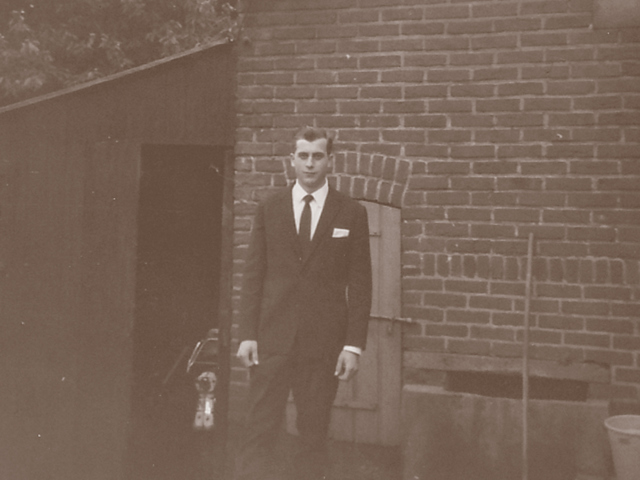
André Adams, born on March 3, 1945, developed a strong interest in technology alongside his musicality. During his military service, he obtained his professional diploma in instrument making, thereby laying the foundation for his later work as an instrument maker.
Where craftsmanship took shape (1965-1973)
After completing his training, André started working as a repairer in his brother’s music shop in Weert. In the evenings, he continued his work in a shed behind his parental home in Thorn.
With the help of a loan, this shed was converted into a workshop. In addition to repairs, a gradual trade in musical instruments developed. In 1970, the company was registered with the Chamber of Commerce under the name Muziekcentrale Adams.
During the same period, the first steps were taken in developing their own timpani. The business grew steadily. In 1973, a shop with living quarters was opened on the Casino in Thorn. That same year, André suffered a heart attack, but the activities continued.
Across the border (1974-1979)
The opening of the shop led to an increase in customers from both the Netherlands and abroad. Within the company, two activities developed: the shop with repair department and in-house production.
In 1975, a warehouse of approximately 500 m² was built at the De Akker industrial estate in Thorn to increase production capacity.
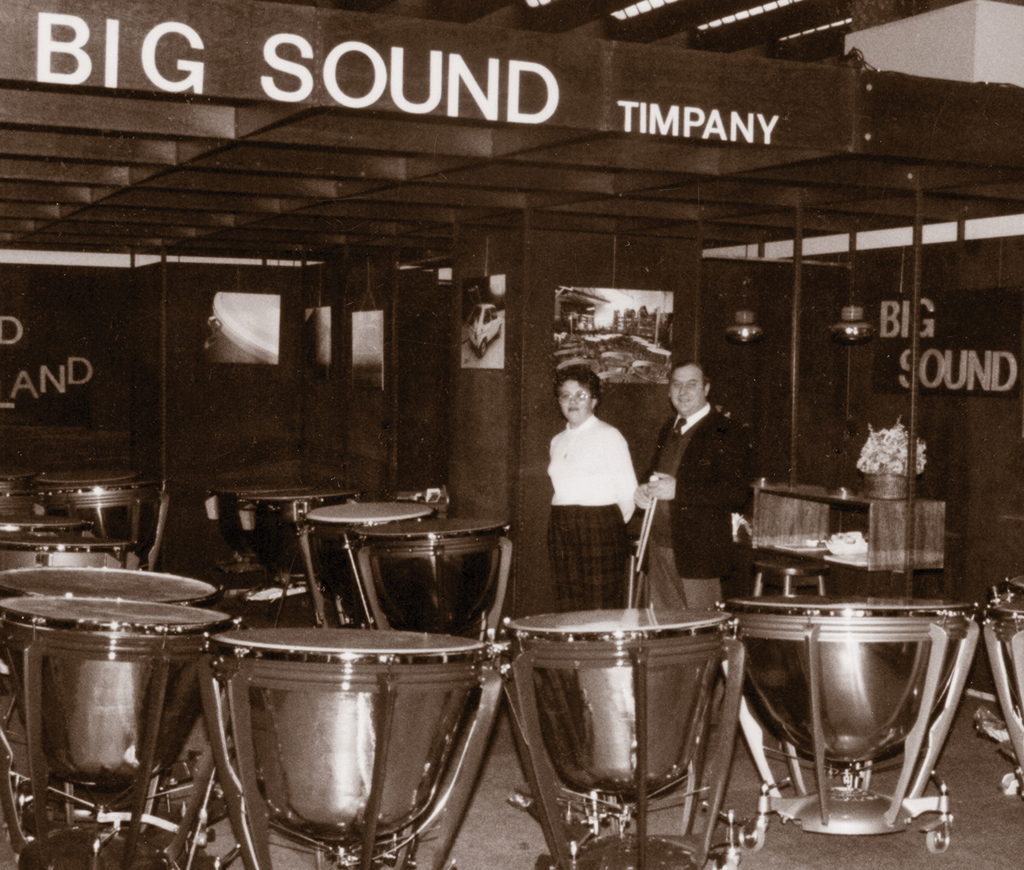
In 1976, a branch was opened in Hasselt, Belgium. This location focused on the Belgian wind band and fanfare market. During the same period, the brand name Big Sound was introduced for the timpani.
At the end of the 1970s, trading activities were expanded to the United States. André and his wife Truus traveled to New York to purchase used instruments. This trade developed into an international activity in which instruments were refurbished in Thorn and subsequently sold in Europe.
The proceeds from this trade were used to invest in machinery and further development of in-house production. During this period, trade contacts were also established in Japan and other parts of the world.
International expansion and professionalization (1980-2001)
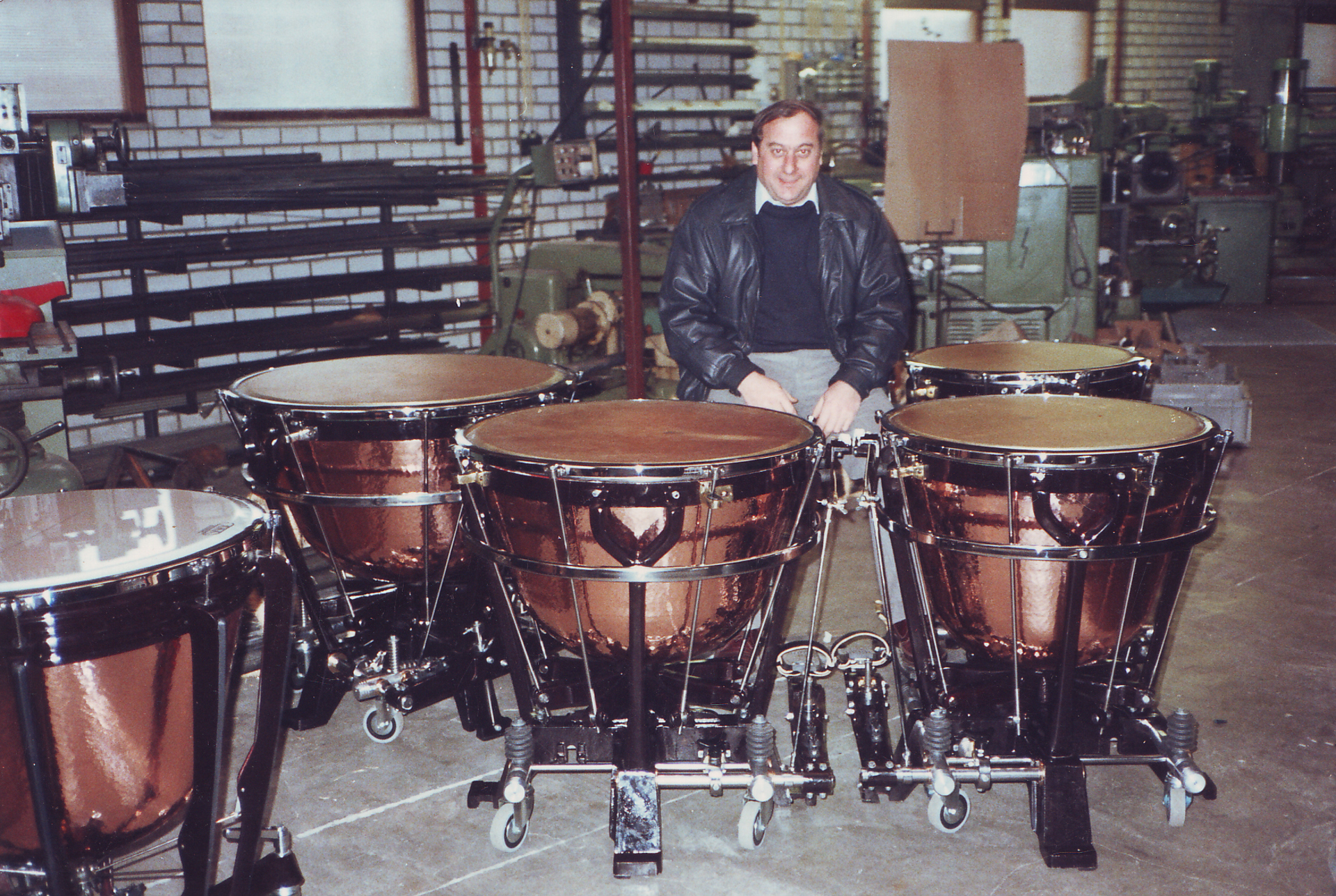
In the 1980s and 1990s, production continued to expand. The Belgian branch moved from Hasselt to Diest, where more space was available for showroom, workshop and warehouse.
In 1987, Frans Swinkels joined Adams. He was involved in the further development of mallet instruments. During this period, there was intensive collaboration with professional musicians in the development and improvement of instruments.
In 1989, the Adams Percussion Centre was opened next to the factory at the De Akker industrial estate. Production, presentation and sales were brought together here.
In 1997, a new factory hall was built at the industrial estate in Ittervoort. In Thorn, there was no longer space for further expansion.
In 2001, Frans Swinkels was appointed director. The shop at the Casino was closed and the activities were relocated to the Percussion Centre near the factory. In Ittervoort, production was further expanded.
Adams brass instruments (2002 - 2009)
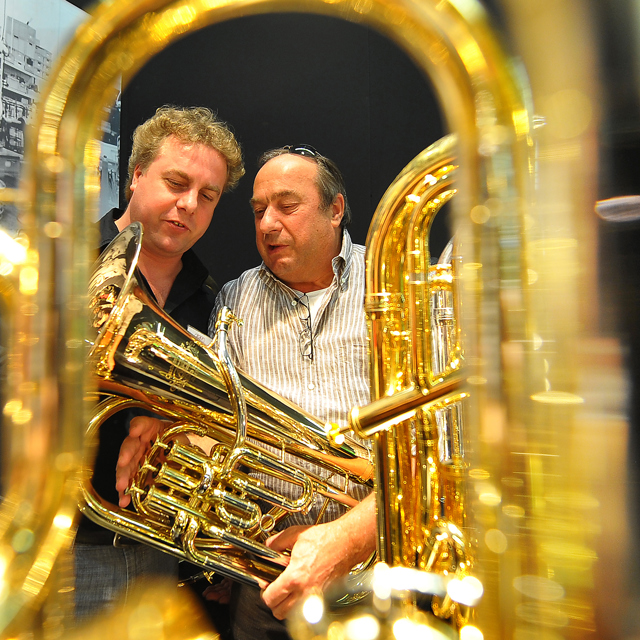
In 2004, the first plans for developing in-house brass instruments emerged within the repair department. Based on craftsmanship and curiosity, experiments were conducted in manufacturing bells and other components, initially to gain a feel for material and shape.
Two years later, in 2006, all company activities were brought together at the industrial estate in Ittervoort. Production, showroom, sales and repair were united under one roof. This created a cohesive center in which development and execution were directly aligned.
In 2007, the first in-house brass instrument was completed. Market responses were positive and provided the impetus to further expand the new product line. As a result, Adams Brass took shape as a fully-fledged division within the company.
In 2008, the company received the Limburg Export Award, in recognition of its growing international activities.
Global player (2010-2019)
In the following decade, Adams strengthened its position as a producer of concert percussion and further expanded its international presence. The brass instrument line also developed steadily; the range was expanded and increasingly found its way to orchestras, soloists and educational institutions at home and abroad.
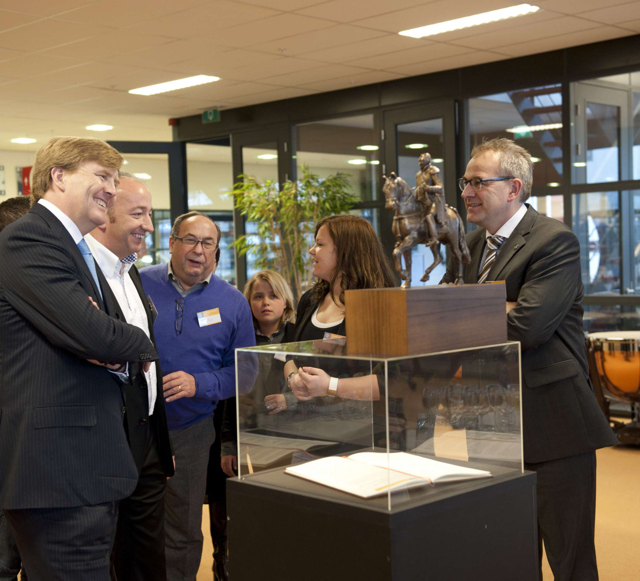
In 2010, the company received the Koning Willem I Prize, an important recognition of entrepreneurship, innovation and international growth.
Further development required expansion of the facilities. In 2015, a new dispatch hall was realized in Ittervoort, bringing the total company area to over 35,000 m² and aligning logistical capacity with global demand.
Growth also continued in Belgium. The shop moved to a new building in Lummen, allowing Belgian activities to continue in a contemporary environment.
An independent family business (present)
Today, the company consists of three divisions: Adams Music Centre, Adams Brass and Adams Percussion, each with its own character and field of activity within the organization.
Adams Music Centre includes the branches in Ittervoort and Lummen and focuses on sales, advice and specialized service for wind and percussion players. The combination of extensive testing facilities, a wide range and an integrated online store makes the centre a regular destination for musicians from home and abroad.
Adams Brass produces brass instruments in its own workshop. The conical parts are manufactured from sheet material, according to a method in which craftsmanship and technical precision come together.
Adams Percussion develops and produces concert percussion and operates worldwide. The intensive involvement of professional musicians in the development process remains a fundamental principle.
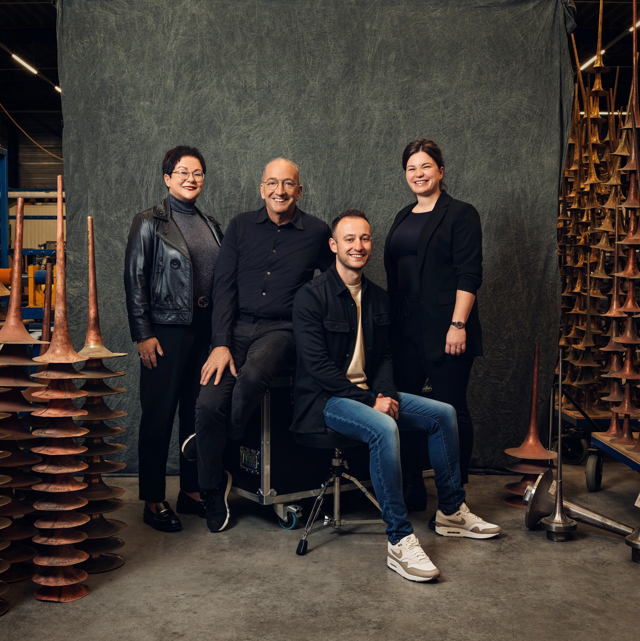
The company is a family business without external investors. This independent position makes it possible to make choices with the instrument and the musician as the starting point. The third generation is now also active within the organization, ensuring the continuity of the company.