
Which saxophone mouthpiece suits you?
The mouthpiece has more influence on your sound than you might think. It determines not only the tone but also how easily you produce that tone. The right mouthpiece makes playing easier, the wrong mouthpiece works against you.
Saxophone mouthpieces all work on the same principle: a reed vibrates against the mouthpiece, thereby producing a sound. But within that principle, there are major differences in material, tip opening, and facing — and those differences determine whether a mouthpiece suits you.
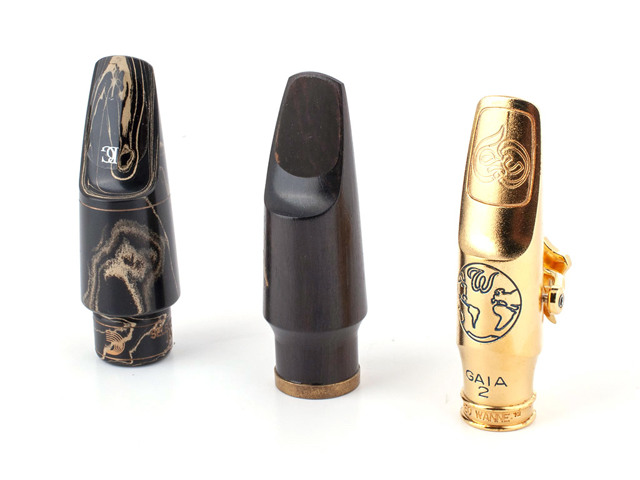
Which material suits which playing style?
The material of a mouthpiece influences the timbre and projection. At Adams, we offer ebonite and metal saxophone mouthpieces: both are more durable than synthetics and suitable for players who are serious about their sound.
Ebonite (also known as hard rubber) is the most commonly used material for saxophone mouthpieces. Ebonite produces a warm, round tone. Classical musicians almost always choose ebonite. The material is also popular among players striving for a full sound in an ensemble, such as in a wind orchestra or brass band.
Metal: Metal mouthpieces are made of brass that is silver-plated or gold-plated. Metal produces a brighter, sharper tone with more projection. Jazz and pop musicians often choose metal because the sound carries through more easily within a band. Metal mouthpieces are generally more expensive than ebonite.
As a guideline: classical or wind orchestra → ebonite. Jazz, pop, or big band → metal or ebonite with a larger tip opening.
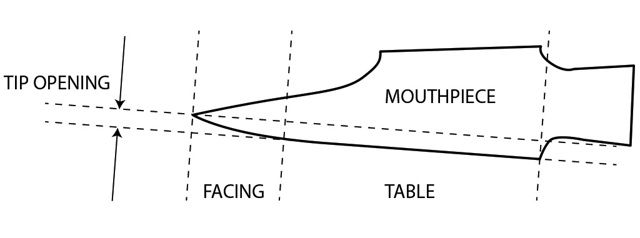
What is the tip opening and why does it matter?
The tip opening is the distance between the tip of the mouthpiece and the reed. This distance determines how much resistance you feel while playing.
A small tip opening provides little resistance and a warmer, more controlled tone. This is ideal for beginners and classical players. The downside: you have less dynamic range.
A large tip opening gives more freedom in tone shaping and dynamics, but demands more from your embouchure. Advanced players and jazz musicians often work with a larger opening to add more expression to their playing.
There is a direct relationship with reed strength: the larger the tip opening, the more flexible the reed you need. With a small tip opening, you use a stronger reed.
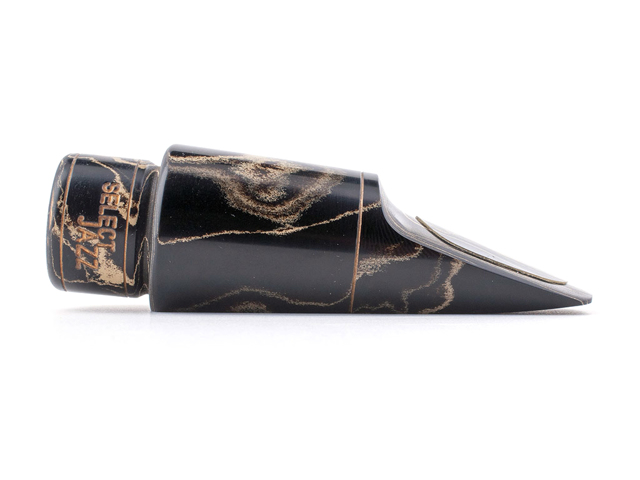
What is the facing?
The facing is the part of the mouthpiece that rounds off towards the tip. The length of the facing determines how the reed responds.
A short facing provides more control and a more stable tone. Classical players often choose this.
A long facing makes the mouthpiece more responsive and provides more room for nuance and expression. Jazz musicians often prefer this.
Which mouthpiece do we recommend for beginners?
Adams recommends the Selmer C* Series 80 mouthpiece for beginners. This is available for soprano, alto, tenor, and baritone. The average tip opening is ideal for starting out: not too much resistance, but enough to develop a full sound. Combine this with a Vandoren Traditional reed in strength 2 or 2.5.
Also, don't forget mouthpiece pads. These protect both your teeth and the mouthpiece itself.
Which mouthpieces suit advanced and professional players?
Once you have progressed further, it pays to experiment. The choice depends heavily on your playing style and the genre.
For classical playing, Vandoren and Selmer are the leading brands. They offer a controlled sound with good intonation and are widely represented in wind orchestras and conservatories.
For jazz and pop, Meyer, Jody Jazz, and Theo Wanne are interesting options. They each provide a different timbre, ranging from warm and flexible to clear and pronounced, and are popular with players seeking expression and projection.
A mouthpiece upgrade has more effect on your sound than most players expect. If you are unsure what suits you, come visit our store in Ittervoort or Lummen. Our saxophone specialists will let you try out mouthpieces on your own instrument. That way, you can hear the difference for yourself.
Choosing a mouthpiece remains a personal matter
What works for one player does not necessarily work for another. The material of your instrument, your reed, your embouchure, and the music you play all play a role. The guidelines above provide a good starting point, but ultimately, your ear decides.
View our full range of saxophone mouthpieces or read more about saxophone reeds to complete the picture.
Frequently Asked Questions
Which mouthpiece do you recommend for beginners?+
Adams recommends the Selmer C* Series 80 mouthpiece for beginners. This mouthpiece is available for soprano, alto, tenor, and baritone. The tip opening is medium: not too much resistance, but enough to develop a full sound. Combine it with a Vandoren Traditional reed in strength 2 or 2.5. Add mouthpiece pads to protect your teeth and the mouthpiece.
Which mouthpieces suit advanced classical saxophonists?+
For advanced classical players, the Selmer C**, the Vandoren V-5, and the Selmer Concept are each worth trying out. They each have their own distinct sound character and respond differently to your embouchure and playing style. There is no point in choosing one based on paper. The only way to know what suits you is to test them on your own instrument. At Adams in Ittervoort or Lummen, you can do this with the guidance of our saxophone specialists.
Which mouthpieces suit advanced jazz players?+
For advanced jazz players, we recommend three mouthpieces that each take a slightly different direction: the Vandoren V-16 series, the Meyer 6MM, and the Jody Jazz HR* 6*.
- The V-16 delivers a full, dark jazz tone with plenty of body.
- The Meyer 6MM is a classic with a warm, flexible sound that is versatile, ranging from bop to soul.
- The Jody Jazz HR* 6* combines the response of ebonite with more clarity and projection.
Here too, the rule applies: try them on your own instrument. What sounds appealing on paper may not work in practice with your embouchure and playing style.
What does the number or letter on my mouthpiece mean, such as C* or 5?+
These designations refer to the tip opening. The higher the number or the further down the alphabet the letter, the larger the opening in that manufacturer's system. But note: the scales are not comparable between brands. A Vandoren 5 and a Selmer 5 do not have the same tip opening. Always compare mouthpieces by brand, not across brands.
Do I need to buy new reeds if I switch mouthpieces?+
Not necessarily, but it may be necessary. The tip opening of your new mouthpiece determines which reed strength works best. With a larger tip opening, you need a more flexible reed; with a smaller opening, a stronger reed. If you switch from a C* to a mouthpiece with a larger opening, chances are you will also need to adjust your reed strength.
How do I know if my mouthpiece is worn out?+
Look at the tip and the rails: the narrow edges on either side of the opening. If the tip is damaged or dented, or if the rails are worn unevenly, the mouthpiece will no longer play optimally. With ebonite mouthpieces, discoloration or a rough interior can also be a sign of wear.
How do I know if my mouthpiece no longer suits me?+
There are two recognizable signs.
The first: you cannot find a comfortable combination of reed and mouthpiece, no matter how often you switch reed brands or strengths.
The second: you feel like you cannot release your air, as if the mouthpiece is working against you instead of with you.
Both are signs that the mouthpiece no longer suits you. As a player, you have progressed beyond what your current mouthpiece can handle.
Does it matter if I buy a mouthpiece with my instrument or separately?+
Mouthpieces included with beginner instruments are functional, but rarely optimal. For the first or second year, that is fine: you have enough on your plate without having to consider changing mouthpieces as well. After that, you will notice that a separately purchased ebonite mouthpiece costing €100 to €200 has a much greater effect on your sound than most other upgrades in that price range.