
Clarinet Systems
For most clarinettists in the Netherlands and Belgium, the Böhm system is the straightforward choice. It is the most widely used system in Europe and the foundation of virtually every clarinet you will find at Adams Music Centre. That said, alternatives exist, and it is worth knowing what they mean.
There are several different key systems for the clarinet. The two most well-known are the French Boehm system and the German Oehler system. Each system has a different bore and key mechanism.
When reading a description of a clarinet, you often see 17/6 or 22/6 mentioned. This indicates the number of keys and rings a clarinet has. A 17/6 clarinet has 17 keys and 6 rings. And one with 22/6, you guessed it, has 22 keys and 6 rings. From this, you can often deduce which system a clarinet uses.
Boehm system
The Boehm system is the most widely used system in the Netherlands. The system was initially developed for the flute by Theobald Boehm. Hyacinthe Klosé and Auguste Buffet jeune later adapted this system for the clarinet. From this system, the parts of the clarinet, especially the rings and keys, have received their names.
This is by far the most widely used system. Since the beginning of the 20th century, all clarinets outside Germany, Austria, and Russia use the Boehm system. A standard Boehm system has 17 keys and 6 rings. There are also Boehm clarinets with a system of 18/6 and 19/6. These clarinets have one or both of the following extra keys.
Left E? Key
The left E? key. This is not really an extra key but an extra touchpiece so that you can operate the E? key with the left pinky. This can make difficult passages easier to play. If you do not use the left E? key often, it can get in the way. It is very easy to have this key removed without affecting the overall functioning of the clarinet.
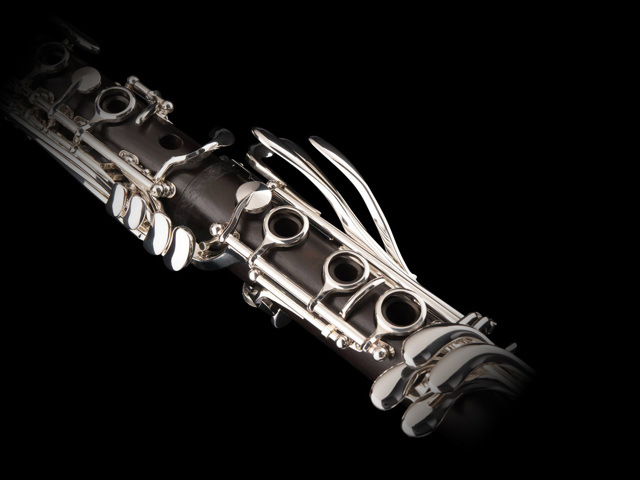
The Low F Correction Key
The low F correction key. Clarinets often sound slightly flat on the low F. Therefore, some professional models have an extra key that raises the pitch of the low F slightly.
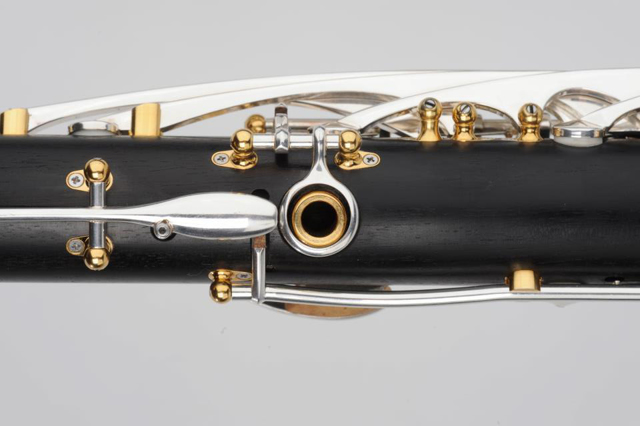
Oehler System
The Oehler system is a clarinet key system developed by Oskar Oehler. It adds tone holes to correct intonation and acoustic shortcomings, particularly of the notes B and F, where you had to use different fingerings. The Oehler system is primarily used in Germany and Austria and is therefore also known as the German system.
The system has more keys than the Boehm system, up to 27 even! It also has a narrower bore and a longer, narrower mouthpiece. The sound therefore closely resembles that of a clarinet with an Albert mechanism. A clarinet with an Oehler system typically has 20 keys and 6 rings.
At Adams, the Oehler system is available through Uebel. This is a niche for professional players who specifically seek out this system — typically orchestral musicians performing in a German or Austrian ensemble, or players who are drawn to the tonal character of the German system.
Albert system
The Albert system was developed by Eugène Albert. This system is still used by clarinetists performing in Belarusian, Russian, Ukrainian, and Turkish styles, as well as Klezmer and Dixieland. They choose this system because it sounds warmer and has more volume in the lower register.
A clarinet with the Albert system can be recognized by the wider mouthpiece, the shorter and more rounded barrel, the overblowing key at the front with its operation at the back, and the rollers on the keys operated by the pinkies. The latter feature is also often seen on saxophones. A clarinet with the Albert system usually has 20 keys and 6 rings and is no longer being produced.
Reform Boehm System
The Reform Boehm system, designed by Fritz Wurlitzer, combines the bore of a "German" Albert clarinet with the mechanism of the "French" Boehm clarinet. You could say it offers the best of both worlds. These types of clarinets are often chosen by professional musicians for their rich, warm sound and the good playability of the Boehm system.
Since clarinets with the original Boehm system have shifted significantly in sound towards the Reform Boehm system over the last 20 years, this system is rarely used anymore.
Which system is right for you?
For most clarinettists in the Netherlands and Belgium, the answer is straightforward: the Böhm system. It is the system you learn on, the system your ensemble plays on, and by far the one with the widest range of instruments available. Buffet Crampon, Selmer, Backun and Yamaha: all major manufacturers build their clarinets on the Böhm system.
The Oehler system is a deliberate choice, made by professional clarinettists, usually on the advice of a teacher or conductor. If you play in an ensemble or orchestra that specifically requires the German system, Uebel is the brand to look for at Adams.
The Albert system is for specialised musical styles. If you play klezmer or Eastern European folk music and are specifically drawn to that sound, it is worth reading more about it. But for a first or second clarinet, it is not a logical starting point.
Not sure which system suits your situation? Our clarinet specialists in Ittervoort and Lummen are happy to help.
Frequently Asked Questions
What is the difference between a 17/6 and an 18/6 clarinet?+
A 17/6 clarinet has 17 keys and 6 rings: this is the standard Böhm system. An 18/6 clarinet has one additional key: the left E-flat key. This allows the E-flat key to be operated with the left little finger as well. Some players find this useful for fast passages; others find the extra key gets in the way. A 19/6 clarinet has both the left E-flat key and the low F correction key.
Does the key system affect the sound?+
Yes, but indirectly. The system determines the bore of the clarinet, and the bore has a direct influence on the sound. The Böhm system has a wider bore than the Oehler system, producing a brighter, more projecting tone. The Oehler system has a narrower bore, resulting in a darker, fuller sound. Choosing a system is therefore partly a choice of tonal character.
Can I switch from one system to the other?+
Technically yes, but it is not a small step. The fingerings are different, the clarinet looks different and the sound differs noticeably. Switching from Böhm to Oehler or vice versa takes months of practice. Most players therefore do not change systems unless there is a specific musical reason to do so.
Is the Oehler system harder to play?+
Not harder, but different. It has more keys and a different ergonomic layout. Players trained on the Oehler system find the Böhm system equally unfamiliar in reverse. Which system feels more natural depends entirely on what you learned to play on.
Does the brand determine which system a clarinet uses?+
Yes. Buffet Crampon, Selmer, Backun and Yamaha build exclusively Böhm clarinets. For the Oehler system you need to look at specialist manufacturers such as Uebel.