
When do you take the step towards a professional musical instrument?
You have played your current instrument for years. It has carried you through rehearsals and performances and helped your technique grow.
But somewhere in that development, something has changed. The instrument that was once sufficient can no longer keep up with you. The projection no longer carries in a larger hall. The tone remains flat where the music calls for depth. The response lags behind your technique.
These are not shortcomings in your playing. They are limitations of the instrument. And that is something you can change.
This article focuses on wind instruments and percussion — the expertise of Adams Music Centre. Do you play a different instrument? Then different considerations apply, and unfortunately, trade-ins are not possible at Adams.
Does your instrument no longer match your level?
A student instrument is forgiving. It forgives mistakes in breath support, it does not require a perfect attack and it responds even if your articulation is not correct. These qualities help you learn. They become a limitation once you advance.
You notice it in the response speed. Where you once had time to build a note, you now expect immediate response. The instrument does not provide it. You compensate with more force, with a different way of blowing, with adjustments that should not actually be necessary. That costs energy and it costs control.
Recognizable? Then it’s simple: you’ve outgrown your instrument.
It’s time to trade in your instrument or upgrade to a model that truly grows with your playing. More control, more sound, less compensation, and above all: more joy in playing.
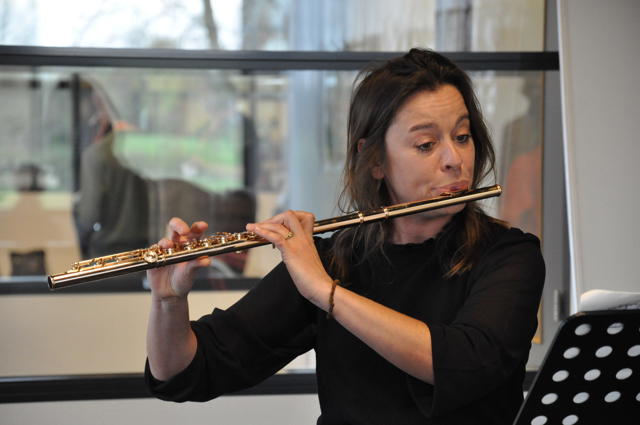
Lack of projection
In a small practice room, everything sounds as you expect. As soon as you play in a hall or in an ensemble with more instruments, the sound does not blend with the rest and you disappear in the mix. Not because you play less well, but because the instrument lacks the projection to carry through. You blow harder and the result remains the same.
A professional instrument carries the sound further without you having to force it. You may not always hear that difference immediately within the ensemble, but your audience certainly will.
Tone color that does not support the music
Student instruments are functional. They sound clear enough for practice, but they do not give you the opportunity to add the complexity that much music requires. You have a warm solo passage and the tone remains flat. The emotion does not come through.
This is not a lack of technique. It is a limitation of the material and construction. A professional instrument gives you the opportunity to add nuance to the tone color. It responds to subtle differences in the way you blow and gives you the possibility to truly put emotion into your music.
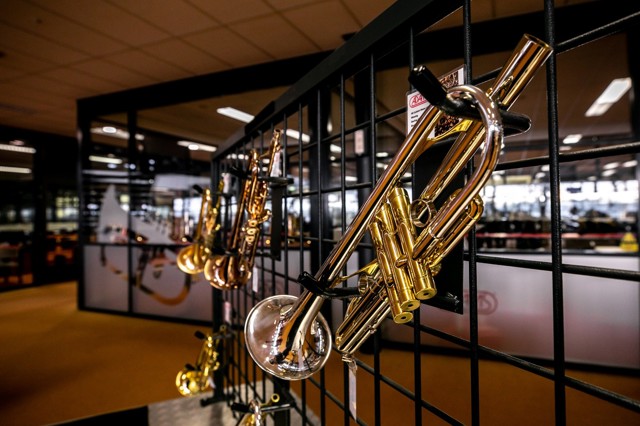
The moment of transition
There is no fixed rule that says when you can upgrade. There are logical moments: completing your C or D diploma, starting at the conservatory. But also when you notice that your instrument holds you back instead of supporting you. When you are technically beyond what the instrument can handle. When you want to express more musically than your instrument allows you to produce.
Many musicians wait too long to take that step. Especially because an instrument is an investment. People think that a professional instrument is only worthwhile for conservatory students or soloists. That is not correct. A better instrument helps you grow. It makes practicing more effective because you immediately hear what works and what does not. It gives you the space to focus on music instead of compensating for technical shortcomings.
Is a professional instrument only for conservatoire students?+
No. But the switch makes most sense from an advanced level onwards. A professional instrument helps you practise more effectively and progress faster, because you no longer have to compensate for the limitations of a student instrument. A beginner instrument is forgiving. A professional model gives you the precision and response that match the technique you have already built up.
When should I upgrade as a woodwind player?+
You notice that your instrument is working against you. The intonation is difficult to adjust, or the keys feel stiff. For woodwinds, you notice the upgrade mainly in response, intonation, and ease of playing.
Your instrument also lags behind if the response speed is no longer right. Where you used to need time to build up a note, you now expect an immediate response. The instrument does not provide that. You compensate with more force and a different way of blowing. That costs energy and control.
Material plays a major role. For clarinets, the difference between synthetic and grenadilla makes a noticeable difference in timbre and projection. For flutists, switching from a silver-plated headjoint to a fully silver or gold headjoint results in a warmer, richer sound.
Concrete signs:
- Intonation remains difficult, even after tuning by a repairer
- Your instrument does not respond immediately enough to your attack
- In a concert hall or ensemble, you fade into the background, while you sound good in the practice room
- The timbre remains flat, even when you want to add nuance
When should I upgrade as a brass player?+
The upgrade lies in valve compression and materials. A professional model gives you more control in the high register, a richer sound due to better alloys, and a valve mechanism that lasts for years without leaking.
Valve compression is crucial. If your valves leak air, you lose projection and control. You blow harder, but the result remains the same. A professional instrument has more precisely shaped valves that seal virtually airtight.
Projection also becomes a problem as soon as you play in a hall or a larger ensemble. In a rehearsal room, everything sounds as you expect. As soon as you play with more instruments, the sound doesn't fit with the rest and you fade into the background. A professional instrument spreads the sound further without you having to force it.
Concrete signs:
- Valves feel loose or leak air
- You struggle with control in the high register
- The sound feels "thin" or "hollow" compared to fellow players
- You compensate with more power, but the projection lags behind
- The timbre does not give you the space to put emotion into solos
When should I upgrade as a drummer?+
Shell thickness, hardware quality, and head choice make all the difference. A professional drum kit responds more consistently, projects better, and has hardware that doesn't immediately sag during intensive playing.
With drum kits, you notice the upgrade primarily in sustain, projection, and stability. Cheaper drum kits have thin shells that resonate less and hardware that does not remain stable during a rehearsal or performance. You notice it as soon as you play in a band or orchestra: your drum kit struggles to cut through.
A professional drum kit also gives you more possibilities in timbre. Student instruments sound functional enough to practice, but they do not give you the chance to add the complexity that much music requires. The tone remains flat, even when you want to add nuance.
Concrete signs:
- Hardware sags during playing
- The toms sound "dull" or do not respond well to tuning
- Your drum kit struggles to stand out above a band or orchestra
- You notice that other drummers have more "body" in their sound
- The sustain is short and the sound does not project well
Take the step at Adams
The difference between a student instrument and a professional model cannot be judged from a photo. You have to hear and feel it. In the stores in Ittervoort and Lummen, you can test instruments side by side in test rooms with good acoustics. Pay attention to the response, projection and tone color. The difference lies in details that you only notice when you play it yourself.
Advisors who are musicians themselves help you hear that difference. Not only technically, but also from their own experience.
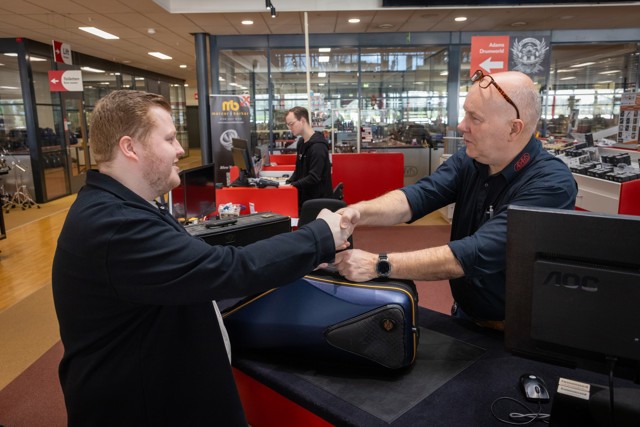
What to bring to your test session
Do not forget if you decide to come and test an instrument:
- Your current instrument. This lets you make a direct comparison in sound and playability.
- Your own mouthpiece, sticks and reeds. Testing with your familiar setup gives the most honest impression of the new instrument.
- Music you know well. Bring pieces you can play from memory. That way you can focus entirely on the sound.
- A critical pair of ears. Your teacher or a fellow musician is welcome to come along for a second opinion.
Can I test the instrument in my orchestra?+
We understand that the acoustics of your own rehearsal space or concert hall differ from our test rooms. Ask our advisors about the possibilities for a trial period (playing out), so that you can be certain that the instrument blends perfectly into your ensemble.
What assurance do I have after my upgrade?+
At Adams, service does not stop at the sale. Every instrument that leaves our store, whether new or used, is fully technically inspected by our master technicians. You receive a standard warranty on your purchase.
We have our own professional repair workshop in both Ittervoort and Lummen. Should your instrument require an adjustment over time, the experts who know your instrument inside and out are ready to assist you.
Ready for the next step?
Feeling like your current instrument is holding you back?
Book a no-obligation test session in Ittervoort or Lummen and hear the difference for yourself.
Would you like to upgrade?
You can trade in your old instrument and have the value deducted immediately. No negotiating via Marktplaats, no waiting weeks for a buyer. You hand it in, we provide a fair appraisal and you go home with an instrument that matches your level.
What do our customers say?
Customers from across Europe rate our service:
4.6 out of 5 stars on Google Reviews and 4.8 out of 5 stars on Trustpilot.
Have you recently shopped with us or used our services?
We would love to hear about your experience. Your feedback helps us to continue improving our service and makes it easier for other customers to make the right choice.
Google review Trustpilot review
Thank you for your trust and support! #TogetherInMusic
