
Flugelhorn Accessories
To get the best result from your instrument, you need the right equipment. Besides your instrument, you'll need a mouthpiece and a case. Additionally, a stand for your instrument is very useful. As a flugelhorn player, you don’t need a mute as often, but we’ll mention them anyway. Of course, you want to maintain your flugelhorn properly, so check the bottom of our page for oil and swabs.
Flugelhorn Mouthpieces
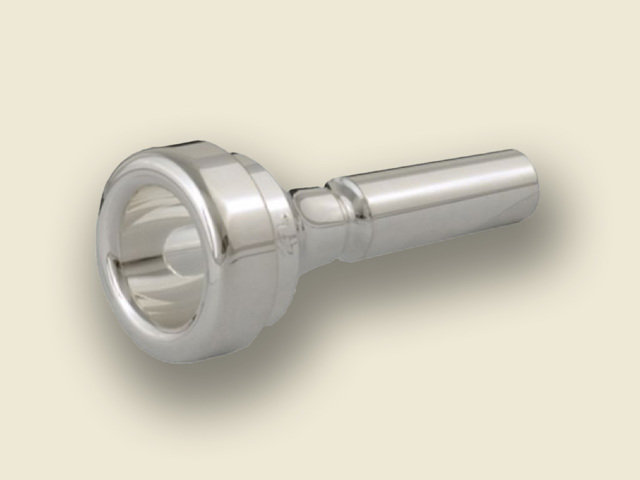
The biggest difference between flugelhorn mouthpieces is the depth of the cup. A shallow cup gives a bright, sharp sound and makes it easier to play high notes. A deep cup, on the other hand, makes the sound softer and warmer. Read more here about how brass instrument mouthpieces work. Most beginner and intermediate instruments come with a mouthpiece included. For professional instruments, builders often assume that you already have a suitable mouthpiece.
Adams recommends beginners try the 3BFL mouthpiece by Denis Wick. The medium cup depth is ideal to start with. Don’t forget to get a mouthpiece brush to keep your new mouthpiece clean.
Flugelhorn Mutes
A flugelhorn doesn’t often require a mute. Only when a specific piece calls for it, or when you're playing in a small venue with vocals, is a straight mute for flugelhorn an option. You will also more frequently use a practice mute, especially when you want to practice without disturbing others. With a flugelhorn, you can often experiment with new sounds using tenor trombone mutes if you're in the mood to explore. You can read about other types of mutes in this article.
Flugelhorn Stand
If you quickly want to jot down a note during rehearsal, it's convenient to be able to set your flugelhorn down on a stand. You place the bell over the cone of the stand, and you can safely leave your flugelhorn.
Flugelhorn Cases and Bags
A flugelhorn usually comes with a case, but it is often only suitable for the instrument and can only be carried by the handle. If you prefer to carry your case as a backpack and have a separate bag for your accessories, we recommend a gig bag. If you want a case that fits everything or need extra protection, a hard case is a better option for you. These cases can often be equipped with an additional set of backpack straps.
Maintenance
Of course, you want to keep your flugelhorn in tiptop condition. Check out our maintenance page to learn what you can do yourself to keep your instrument in good shape. Below are our recommendations for oil, grease, and swabs for flugelhorns.
Oil and Grease for Your Flugelhorn
For a flugelhorn, you need two types of oil: one for the valves and one for the trigger slide on the third valve. For all other slides and tubes, we recommend using slide grease, which helps separate the tubes easily. Since trigger slides move more frequently, we suggest using trigger oil instead of slide grease. If you don’t have trigger oil on hand, use slide grease rather than valve oil, though you may need to apply it more frequently. You can read more about how and when to use oil and grease on our maintenance page.
Flugelhorn Swabs
Many issues with your instrument can be prevented by keeping it dry and polishing it occasionally. Swabs are especially essential for cleaning the inside of your flugelhorn. You can read more on our maintenance page about the best ways to use swabs.
What do our customers say?
Customers from across Europe rate our service:
4.6 out of 5 stars on Google Reviews and 4.8 out of 5 stars on Trustpilot.
Have you recently shopped with us or used our services?
We would love to hear about your experience. Your feedback helps us to continue improving our service and makes it easier for other customers to make the right choice.
Google review Trustpilot review
Thank you for your trust and support! #TogetherInMusic

Aziëstraat 17-19
6014 DA Ittervoort
The Netherlands
+31(0)475 560 700
[email protected]
Bosstraat 73
3560 Lummen
Belgium
+32(0)13 35 20 20
[email protected]