Heideroosjes – Rather Dead Than Withered
19 October 2012
Igor Hobus, the rhythmic heart of the recently “retired” band The Heideroosjes, has been working at Adams Drumworld for some time. His experience as a drummer and his knowledge of the Adams 8000 make him the perfect contact person for you in our store. Want to come and test gear? Get advice from Igor. We’re sure his guidance will be worth its weight in gold.
Below is the story from beginning to end of The Heideroosjes, a wonderful article about an already historic band formed by four unique individuals.
Igor Hobus
T +31 475560721
E [email protected]
Heideroosjes – Rather Dead Than Withered
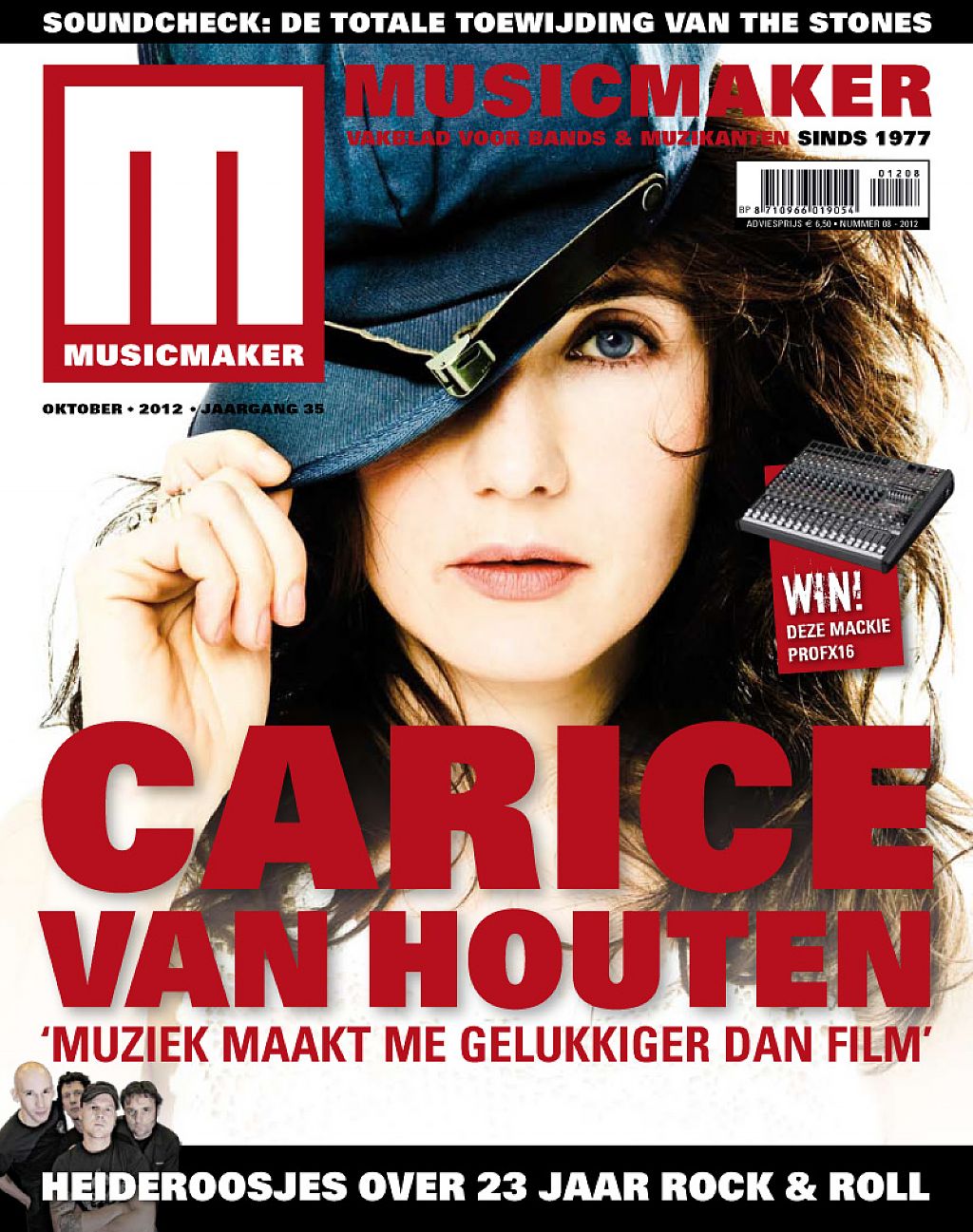
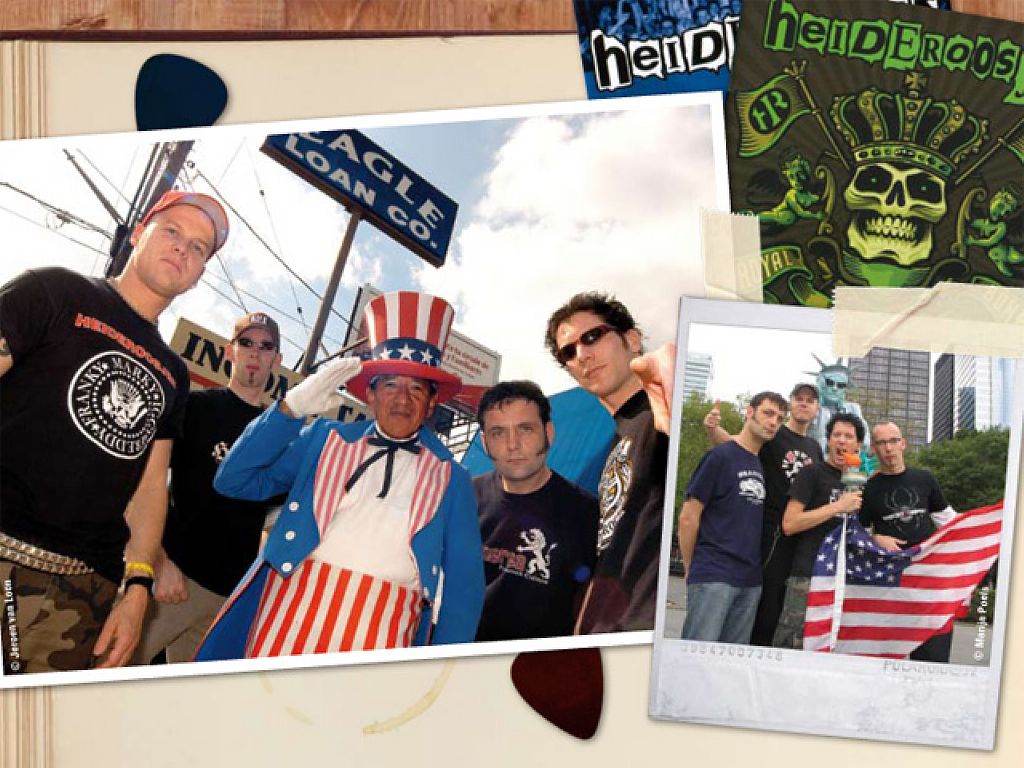
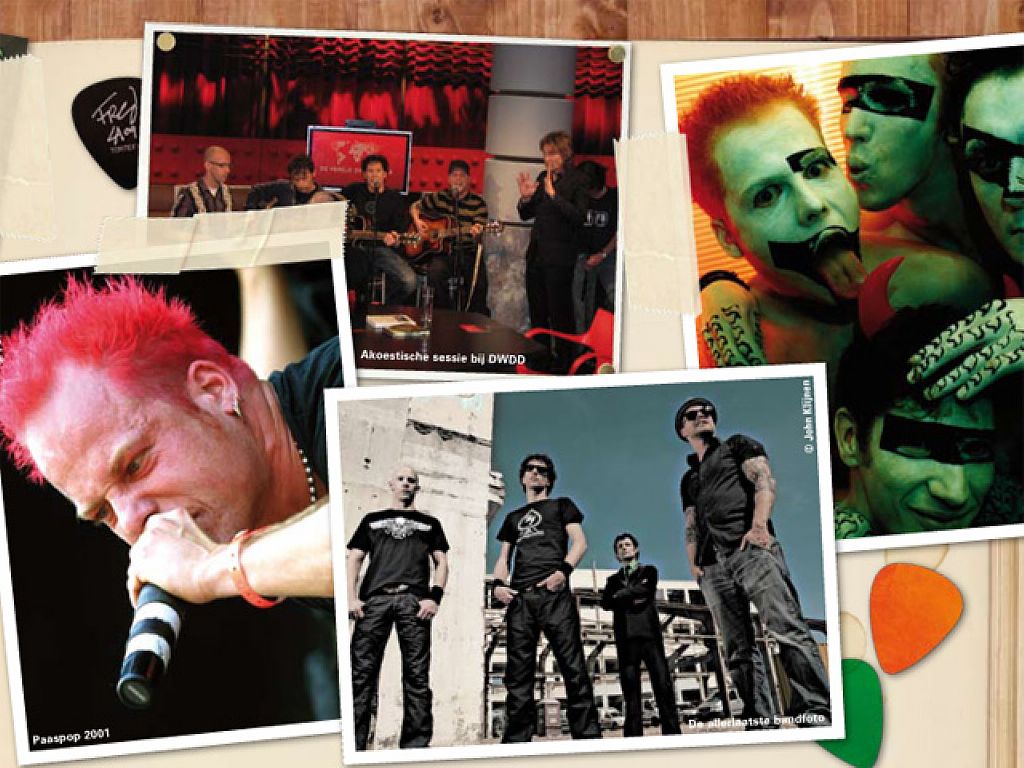
Just a few more concerts and after 23 years the curtain will definitively fall for The Heideroosjes. The fast life of a band simply can no longer be sustained. Slowing down was never an option, leaving only one decision: to stop. Marco Roelofs (vocals/guitar), Frank Kleuskens (guitar/vocals), Igor Hobus (drums) and Fred Houben (bass) look back one last time with Musicmaker on an impressive career full of punk, principles, and stage moments.
“Practicing dying,” is how Marco Roelofs defines The Heideroosjes farewell tour. The final tour in the band’s history takes the four across countless venues and festivals where they have been regulars over the past two decades. Although the very last show has yet to be played, every performance once again feels like the last. “The strange thing is that in this final sprint we are doing pretty big things: Sziget, the Alpha at Lowlands, two sold-out shows at the Melkweg and twice at the AB in Brussels. However, we are stopping now while we are still an energetic band. We don’t want to end up playing for twenty people in the local youth center,” says Roelofs. “It makes this tour quite a mindfuck. People still want to see us; yet we are stepping away. As if you kill your wife to prevent her from becoming ugly.”
PIGPEN
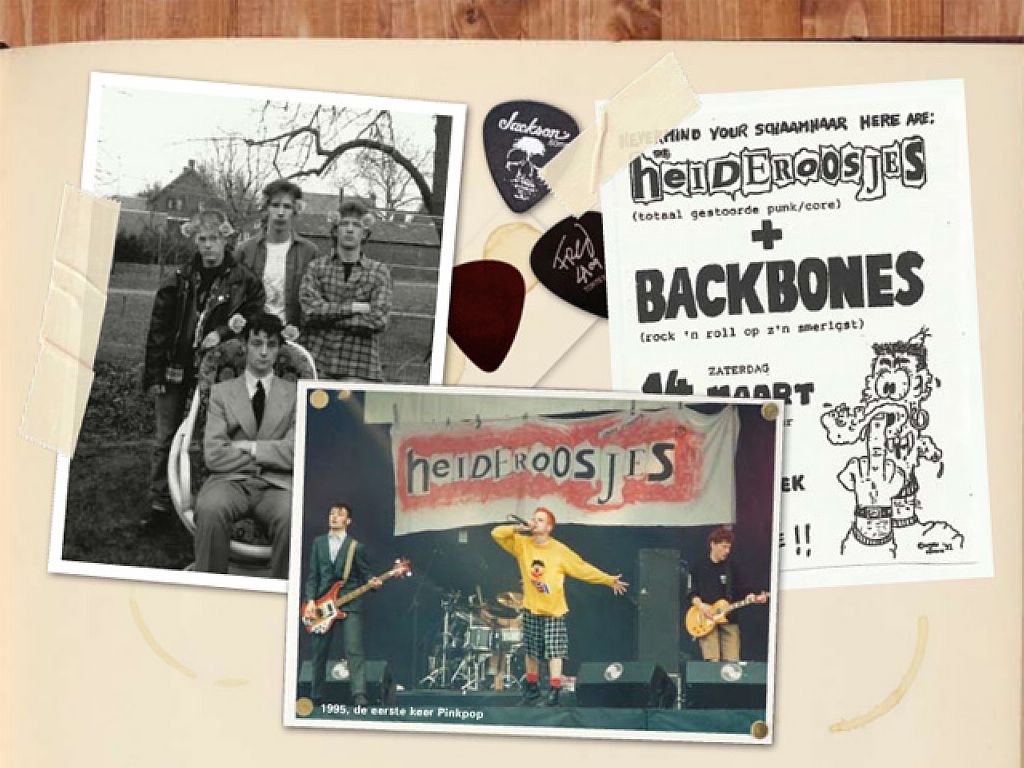
The musical journey of these Limburgers began in 1989 in Horst, when four boys ended up in the same class at the local secondary school. Guitarist Frank Kleuskens: “Igor and I even knew each other from before. I bought a guitar with my brother, and Igor decided to buy a drum kit.” Bassist Fred Houben laughs: “At the time I was in a drum corps and asked Igor if he knew someone selling a drum kit. He didn’t, but if I wanted to play bass I could join their band.” “So I bought a bass guitar!” The three boys initially focused on hard rock until they met Marco a year later. Frank: “Through a friend I heard that he listened to punk, also played guitar, and had Metallica sheet music. That last part really intrigued me. There was no internet back then, so it wasn’t easy to get.” “If you liked metal or punk at that time it was like being part of some secret society of outcasts,” Marco adds. “You were instant allies, no matter how you looked.” The two became friends, and although Marco had never held a microphone before, he joined the band as singer. At first they rehearsed in the attic of the Hobus family home, but after a friendly yet firm request from the neighbors, the young band moved into an old chicken shed. They took their band name from the Flemish comedian Urbanus, who in one of his routines once mentioned the fictional Limburg hard rock band (The) Heideroosjes. Influenced by their new frontman, the music the band played shifted more and more toward punk.
REFINED DEMO
A Limburg punk band—it almost sounds like a contradiction, but according to Marco, that wasn’t the case. “In the big cities, punk wasn’t trendy anymore by the late 1980s. But in more conservative regions like Limburg, people stayed loyal to that kind of music.” There were plenty of venues too, he adds. “Traditionally, in the south of the Netherlands there were youth centers everywhere; small halls next to churches, originally meant for youth work. After the decline of pillarization, they became hangouts for stoners and outcasts. Perfect places to play—and every village had one.” Marco smiles. “So we had already clocked a lot of hours when we first played at the Melkweg. We easily blew those Amsterdam bands off the stage!”
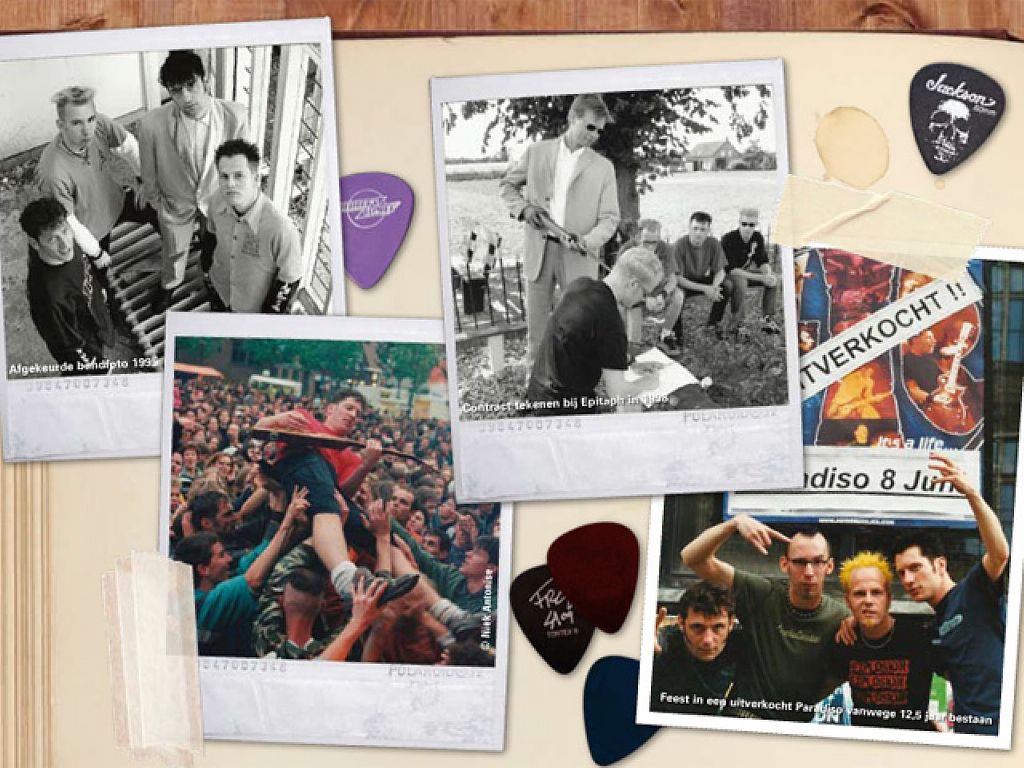
Four years after the band formed, the first album *Noisy Fairytales* was released. Asked how the album came together, the four laugh. “Under terrible conditions!” says drummer Igor. “We recorded it in ten days on an eight-track. It was basically a refined demo. CDs were just coming out at the time, and to stand out we chose that format instead of the usual cassette.” True to punk tradition, the album was self-released. “We had no choice,” Frank explains, “because we didn’t have a label.” Distribution was also handled by the band: taking a backpack full of CDs on the train to big cities, looking for record stores that would stock it. Marco: “Three months later we made the same trip again to check how many had sold.”
BEDSPREAD
In 1995, the Limburgers played Pinkpop for the first time—quite an achievement for a band with no label or management. “We played a lot, but charged relatively little,” says Marco. “Even for our CDs, which were about ten guilders cheaper than the norm. That meant we sold a lot, and that got noticed.” Igor adds: “We drew full venues in the south, which is also where Pinkpop organizer Jan Smeets is from.”
Smeets initially booked Heideroosjes to open for German punk band Die Toten Hosen, but soon added them to the Pinkpop lineup. Marco laughs: “We got paid 750 guilders. So much for my negotiating skills!” The performance left a deep impression on the young band. “We could’ve died happy after that,” Fred recalls. “It felt like we’d reached the top.” Marco: “We were from that region, so we had attended Pinkpop as teens. A few years later we were on that stage ourselves, with a backdrop made from a bedspread. We never dreamed that could happen.”
After a similarly successful show at Lowlands that year, the band toured extensively with Dutch hip-hop group Osdorp Posse. On the surface, an odd combo—but the bands got along brilliantly. Fred: “We just clicked.” According to Marco, they shared the same attitude. “There was a big overlap in our audiences because together we represented a counterculture. Of course, we weren’t aware of that at the time. But the Osdorp guys also opposed the establishment, did everything themselves, and were pioneers in Dutch-language rap.” The tour was a huge success, with sold-out shows night after night. Marco’s eyes sparkle: “Suddenly we were playing in all those venues we used to visit as fans. The rooms were packed, the beer fridge fuller than ever, and all the girls we never had a chance with were now waiting outside the dressing room. Heaven opened up.”
BUCKETS OF SHIT
The Heideroosjes were invited back to Pinkpop the following year, this time on the main stage. “That was a bit nerve-racking,” Frank remembers. “We opened on Monday, so we were afraid everyone would still be in their beds when we played.” Igor: “Apparently they all got up on time, because when we started the field was full and it rocked!” Once again the band wowed everyone. Slowly it became clear that it might be time to take things more professionally. “Before that it was mostly partying and having fun,” says Fred, “but after the second Pinkpop we were a band that counted and it became serious.” The release of *Fifi*, the quartet’s third album and still the best-selling Dutch punk record, contributed greatly. The album entered the charts and the single *Klapvee* even reached the Top 40. What? Punk in the Top 40? “For us that was no reason to celebrate,” Marco explains. “As success grew, the buckets of shit we were showered with got bigger and bigger.” The frontman pulls a disgusted face. “In every interview I had to explain again that we were still genuine and punk, until I even began to doubt myself. All that bullshit took away some of the joy at the time. Nowadays I’m experienced enough to let it roll off me, but when you’re 21 something like that hits you hard.”
CULTURE SHOCK
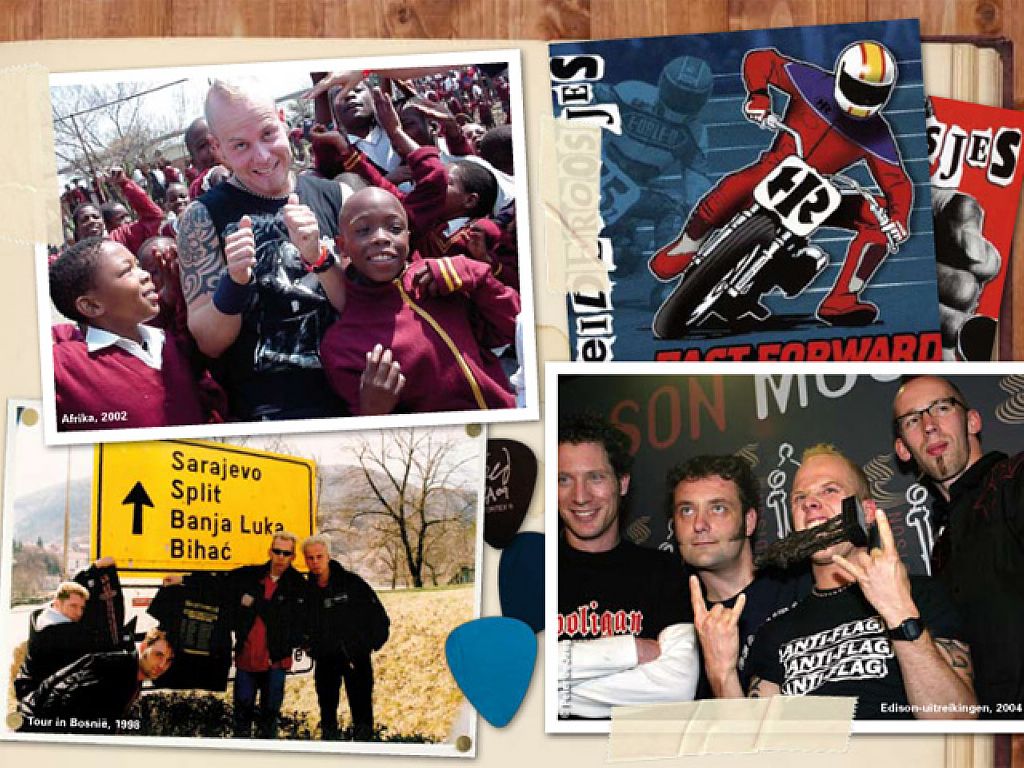
In 1998 Heideroosjes toured former Yugoslavia as one of the first bands. The region was still in the midst of rebuilding after the recent Balkan War. There was a glaring lack of culture and entertainment. As a result, the band was invited by the C.R.A.S.H. foundation to perform a series of concerts. “That seemed like a fun challenge,” Fred replies dryly. Marco: “It was pretty bizarre. In the Netherlands we were near the peak of our fame; we had just finished a sold-out club tour and then we went to Yugoslavia.” He pauses. “There we were with our tight purple hair playing for people who a year earlier had been walking the streets with rifles. Everything was still in ruins! That was an enormous culture shock.” There were no real halls either. The four ended up playing in “spaces,” some still with bullet holes in the walls. Frank: “Luckily we brought our own PA, so we could always play.” Mostly the contact with local youth and the stories they told made an impression. “My grandfather also used to tell war stories here in the Netherlands,” says Marco, “but when someone your own age is telling you he only has one arm and is glad the other wasn’t shot off too—that is a whole other experience.” Igor: “It made you realize how good you actually had it.” Fred adds: “And you learned to appreciate that we always have toilet paper in the bathroom!”
Four years later the band again headed to an unexpected destination: South Africa. The fact that only white Africans attended the shows was a slight disappointment. Against all advice the Limburgers decided to set up a concert themselves in one of the black townships. A PA was rented and the band played a free show on a local school field. Marco: “There isn’t much entertainment in those townships, so quite a crowd showed up. All black people of course, so for the first time in our lives we really felt like a minority.” The frontman’s mohawk drew a lot of attention. Marco laughs: “Everybody wanted to touch it!”
EDISON
One of the biggest low points came in February 2004. The crew bus was involved in a terrible accident. The band members were not in the vehicle, but roadie Eelco was seriously injured and, after a long rehabilitation, unfortunately has still not fully recovered. It was a big blow, as band and crew were very close. Yet it was soon decided to continue the tour promoting the album *SINema*. Not long after, Heideroosjes headed to America, where the band played the prestigious South By Southwest showcase festival in Austin, Texas.
Back in the Netherlands, the band won an Edison Award for their song *Damclub Hooligan* for best single of the year—a public award. For many artists this would be a career highlight, but for Heideroosjes it was different. Fred: “I won’t say it was a joke, but it’s pretty bizarre how it happened.” On radio and television the song was all but ignored, yet Heideroosjes walked away with the prestigious award. “Still, it felt like some kind of victory,” explains Roelofs. “With Heideroosjes we never got recognition because the big names wanted it, but now they simply couldn’t ignore us anymore. That was the case with that Edison too.” The singer grins. “By the way, after that we lost our chances of any radio airplay completely.” The band decided to attend the award ceremony on the condition that they would be given a few minutes to speak about the issue. And the four certainly did not mince words. Part of the statement was: “This single has been fucked in the ass. (…) Ladies and gentlemen radio and clip station coordinators, don’t ignore the Heideroosjes supporters. There are more than you think. We respect this audience. So seize your chance and serve your listeners. Because they have spoken here and now.” “Commercial suicide according to our record company,” laughs Roelofs. “But hey, what’s the difference between not being played and not being played? All those CEOs we fought for years to keep our CD prices low or to get our music on the radio were now in the audience. Normally you can’t talk to them and you’re handed off to a receptionist, but now they were all in the front row. They had no choice but to listen to us!”
RECOGNITION
Has that lack of airplay really bothered the Limbourgers over the past 23 years? “It did,” Marco reveals. “We sold a lot of albums and filled venues, yet we weren’t played. Not even on 3FM, even though public radio should reflect what the musical landscape has to offer. Of course we understood that our music was less accessible than BLØF’s, but there was still a huge audience for our music. We made expensive videos and took part in the whole circus, yet we were ignored. That felt unfair.” Was Heideroosjes capable of being bigger if the band had received the exposure it deserved? “That wasn’t the point,” Marco responds firmly. “It was about recognition for our success and our hard work.”
EMPTY BATTERY
Four years later, Heideroosjes celebrated twenty years as a band. This milestone was celebrated with the release of the double album *Ode & Tribute*, featuring various Dutch acts covering Heideroosjes songs and the Limbourgers in turn covering their own heroes. Not long after, however, news broke that the band was taking a break. Frank sighs. “The battery was completely out.” Igor: “We jumped from one project to the next, but in the end they all started to overlap. We already knew exactly where we’d be in a year and a half, and that we’d be completely booked up.” “And of course we’re older than when we started,” Marco adds to his drummer, “so it became harder to keep up everything and we enjoyed it less. That’s when we told each other we needed to take a step back.” The word “stop” wasn’t mentioned yet. Fred: “During that sabbatical we looked for a way to reinvent the band. A different way of working, so we wouldn’t end up in the same situation after two years.” Still the band couldn’t turn things around. When the Limbourgers picked things up again after some time, the busyness resumed. “The battery was temporarily recharged, but we couldn’t change that schedule,” Igor explains. Marco: “We immediately started a forty-show theatre tour and after three months we realised we hadn’t solved anything. We couldn’t bring ourselves to do it anymore, while normally we always gave 120 percent.” The band faced a tough choice. “Do we milk this thing for a few more years until we end up sadly in some back-room venue, or do we end it with a bang? We chose the latter, even if that’s the hardest way.” Simply stepping back and doing fewer shows was not an option. Fred shakes his head. “It was either this band completely, or not at all. But not halfway.” Frank: “Quitting. Is it smart? No idea. Does it feel good? No, not at all! But somehow it’s the best thing for the band and for us personally.”
GETTING GROUPIES
After 23 years Heideroosjes is definitely calling it quits, with two final shows in Brussels at the end of September. Looking back on their career, do the men have any regrets? “I should’ve gotten more groupies,” Marco jokes. “No, if there’s one band that really got everything out of life, it’s us. Only commercially we didn’t always make the best decisions, but we always did that consciously.” The singer pauses. “If we had released the song Sjonnie En Anita as a single back then, or sold our CDs at normal price, I’d probably be able to buy a bigger car now. That would’ve been nice, but it still felt good to do it our own way.” Asked how the band wants to be remembered in the history books, the four men don’t hesitate. “Multiple generations who now listen to hard music started with Heideroosjes,” says Frank. “So we’ve led a lot of people into the alternative corner.” Fred: “That we’ve contributed that to the scene. That would be nice to be remembered for.”
Source: Musicmaker
Text: Jelle Jansen