
Testing Mouthpieces
Are you looking for a new mouthpiece and want to know if it’s the perfect fit? Order your mouthpiece through our webshop and test it comfortably at home for 14 days. We do ask you to keep everything in good condition so you can return the mouthpiece if you decide not to keep it.
Want to test multiple mouthpieces? Visit one of our stores! Our specialists will be happy to help you!
Visit one of our stores! Our specialists will be happy to help you make the right choice.
To give you the best advice and ensure a fair comparison, it’s important to bring the following items for testing:
- Your own instrument
- Your current mouthpiece
- Your current reed
- Your ligature
By starting with your familiar setup, you have a reference point. This allows you to experience the differences with new mouthpieces. It prevents uncertainty and enables our specialists to provide you with quick, targeted advice based on your playing experience during the test.
Fill in the form to schedule an appointment.
What should you pay attention to while testing?
- Feel: Does the mouthpiece feel good and comfortable?
- Response: How does the mouthpiece react to your playing style?
- Sound: Can you easily produce high notes or a warm tone in the mid-range?
- First impression: Sometimes you immediately know if it’s a match; other times, you realize it’s just not for you.
Trust your instincts, but also ask a fellow musician to listen. Sometimes, others notice things you might miss while playing.
Tips for testing:
Want to try a mouthpiece at home? That’s fine, even if you decide to return it afterward. Just make sure to handle it carefully to keep it undamaged.
- Protection: Protect the mouthpiece while testing.
- Clarinet or saxophone players: Apply a mouthpiece patch before playing to prevent scratches from your teeth and improve comfort.
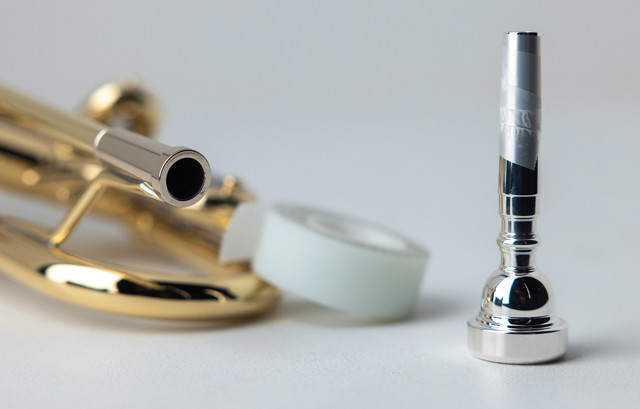
- Brass players: Wrap a small piece of tape around the shank of the mouthpiece (the part that goes into your instrument) to prevent scratches and keep it looking new.
- Clean mouth: Test with a clean mouth—avoid coffee, soda, or food beforehand. Drinking water is always fine.
- Use your own gear: Use your own instrument, reeds, and ligature for a fair comparison.
- After testing: Place the mouthpiece back in its original case to keep everything complete in case you decide to return it.
When should you replace a mouthpiece?
Sometimes, it’s time to say goodbye to a mouthpiece, no matter how well it has served you. Not sure if it’s still good? Look out for these signs:
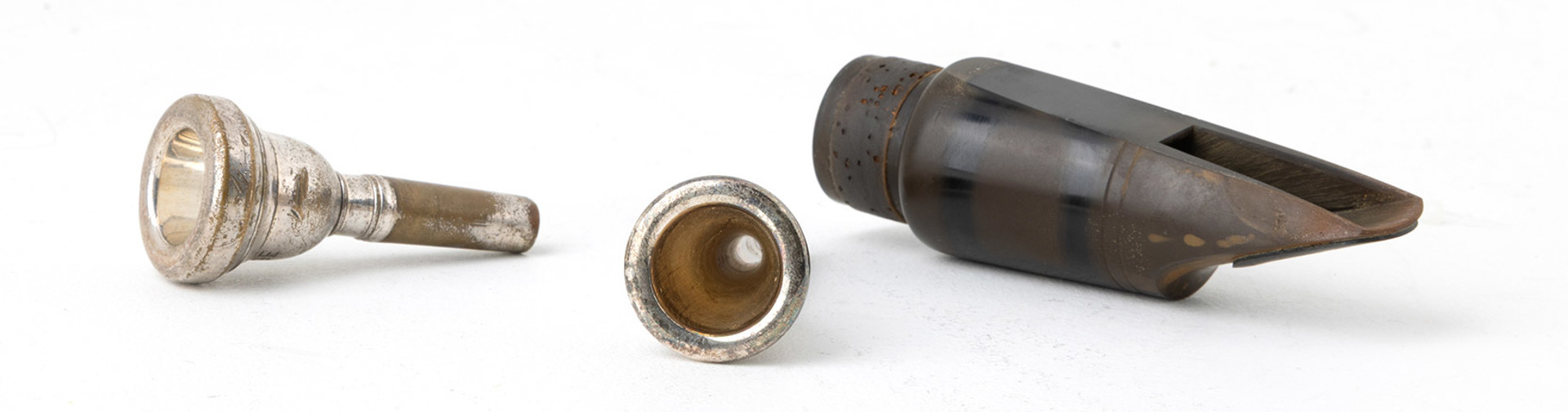
Ebonite mouthpieces (for saxophone or clarinet) can discolor over time. If the mouthpiece has turned greenish or brown, it’s time for a new one. In some cases, these mouthpieces can still be polished.
For brass mouthpieces, check the silver or gold plating. If it’s worn off, it’s not only less attractive but can also be uncomfortable or even unhealthy. We can always re-plate your mouthpiece with silver or gold.
If there are dents on the rim of the mouthpiece, playing comfort may decline, and we recommend replacing it.

Cleaning your mouthpiece
Made your choice? Great! Before returning it, clean your mouthpiece properly. Rinse it with lukewarm or cold water and use a soft cloth. Avoid harsh cleaning agents, as they can damage the material. Prevent mold or bad odors by letting the mouthpiece air-dry on a clean cloth. Store it in a well-fitting case or pouch to keep it protected, clean, and ready for your next playing session.
- Saxophone or clarinet: Never use hot water or cleaning agents. A mouthpiece brush is allowed.
- Brass players: A mouthpiece brush is your best friend. Just rinse it under the tap, easy and effective.
A clean mouthpiece sounds better, feels better, and lasts longer. Small effort, big difference!
Accessories
Want to know which brush or case fits your mouthpiece best? Check below: